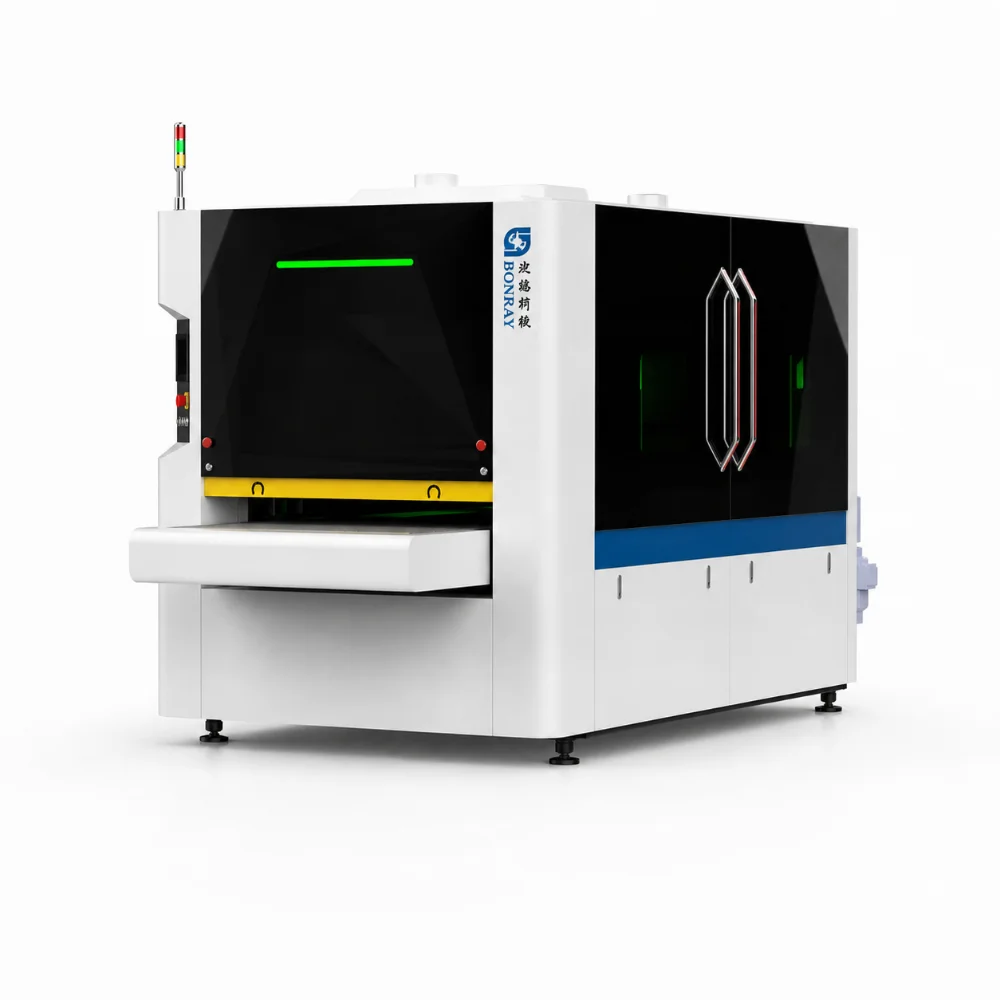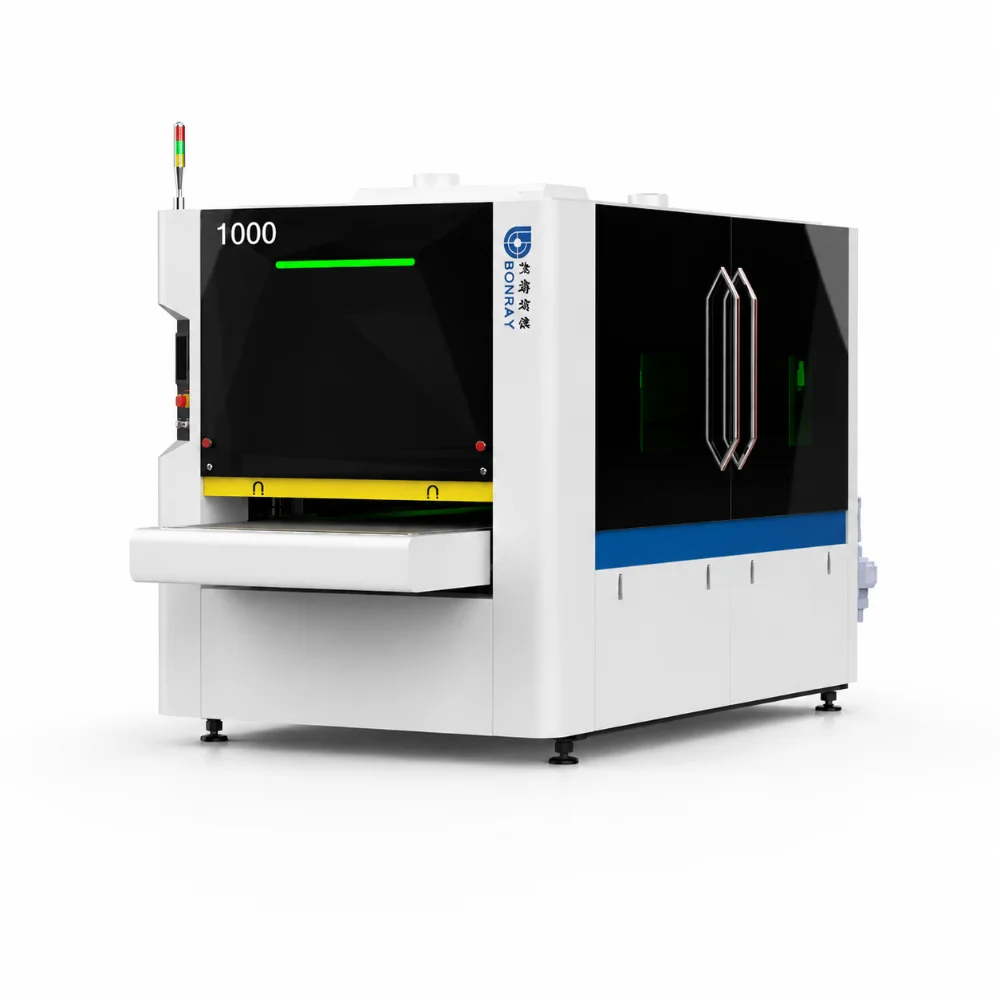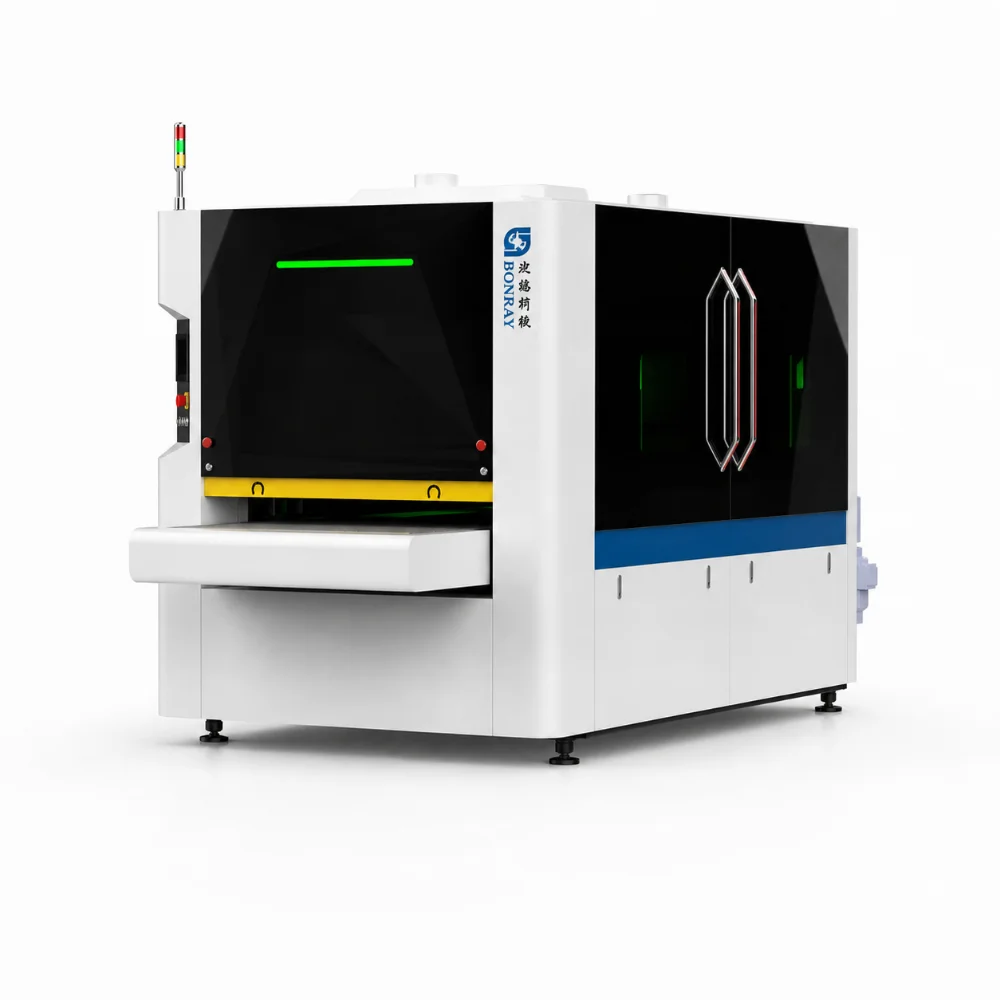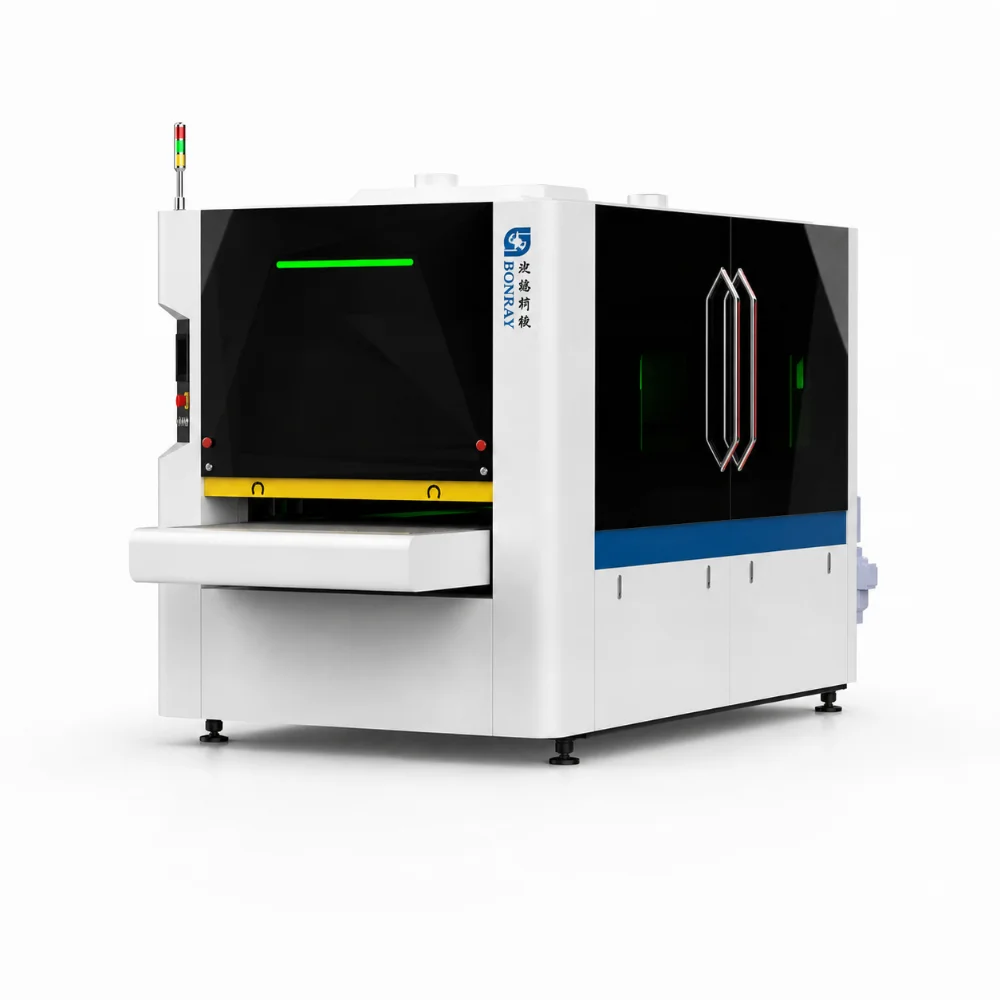
Oxide Removal for Thermally Cut Sheet-Metal Edges
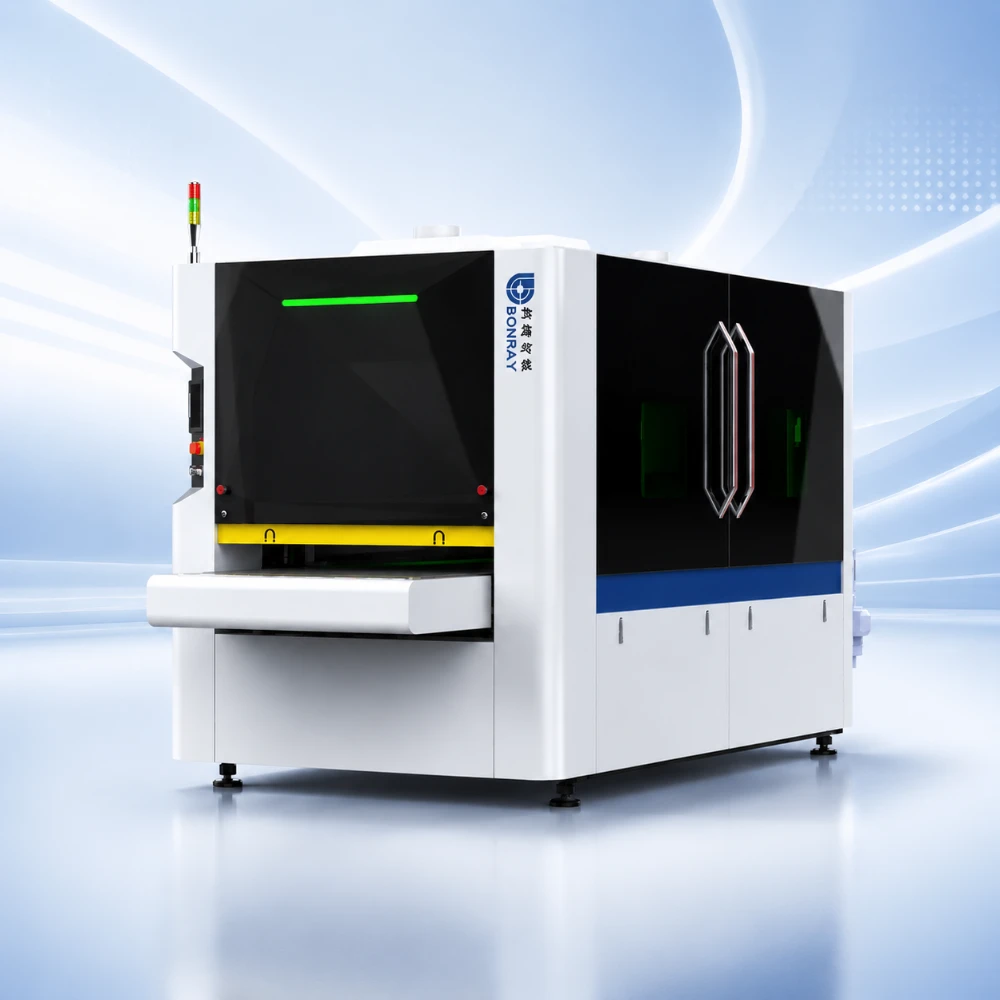
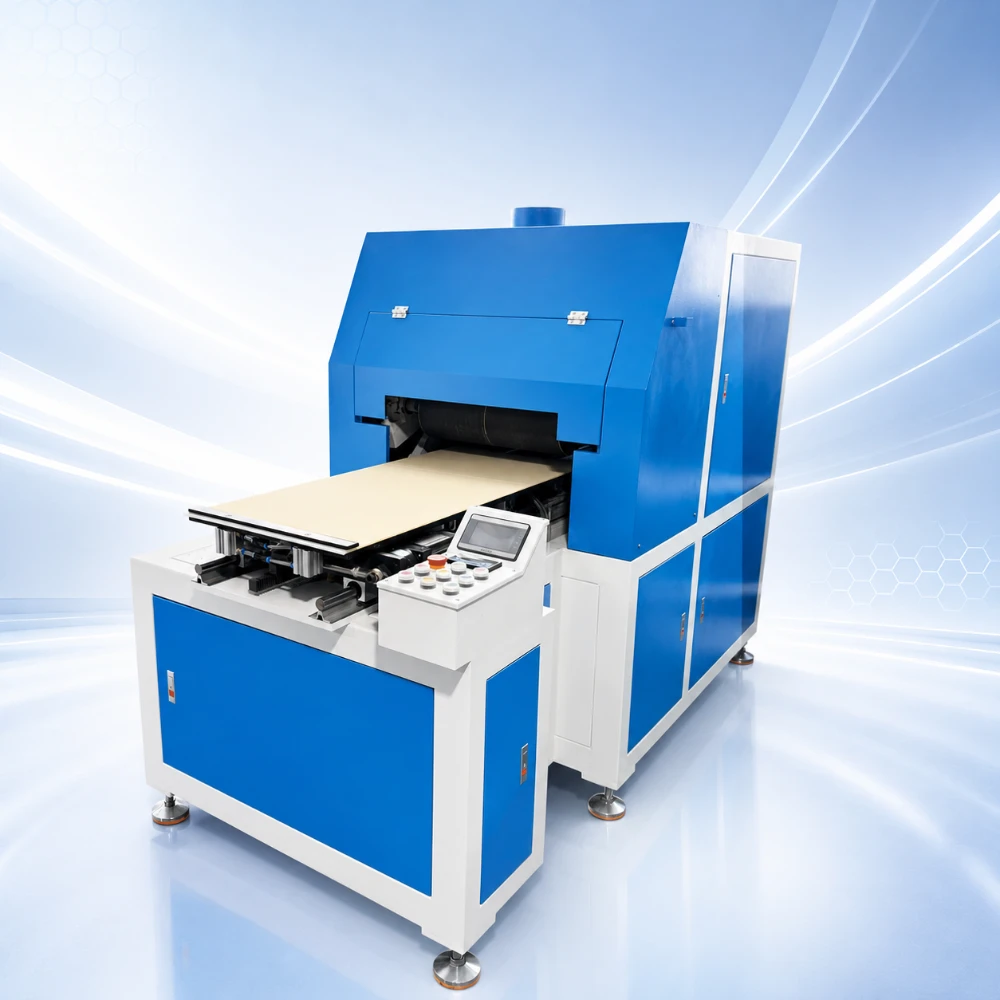
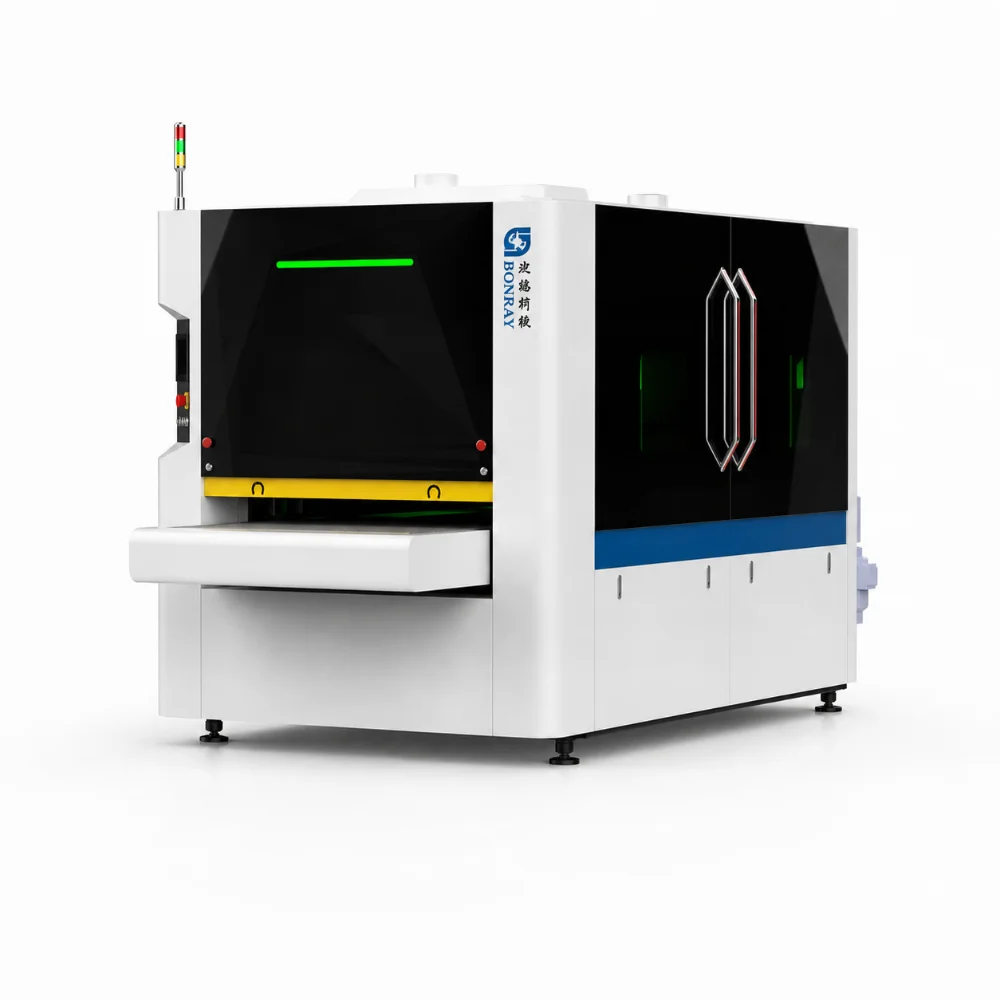
The Oxide Layer Removal Machine is intended for sheet-metal fabricators preparing accessible thermally cut edges before coating, welding or bonding. Oxygen-assisted laser cutting and other thermal processes can leave oxide on the cut face even after the raised burr has been removed. The required brush arrangement must contact that face and achieve the cleanliness specified for the next operation.
For coating shops, enclosure manufacturers and cutting subcontractors, the selection starts with the edge that needs cleaning: outer perimeter, hole wall or slot. Specify the material, cutting process and required cleanliness, then review brush access and holding on representative parts.
Separate the Face from the Cut Edge
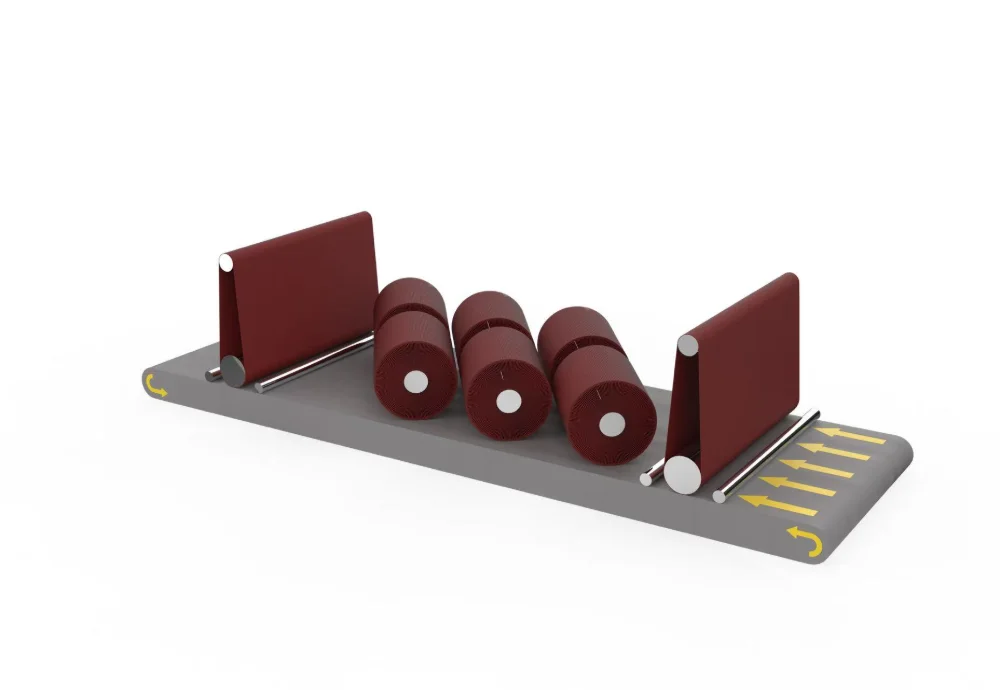
- Exposed broad face: selected wide-belt stations contact the upper flat surface and can address face mill scale within the agreed material-removal allowance.
- Outer vertical cut edge: an oxide film can remain after face grinding; cleaning requires a tool that reaches the sidewall and is compatible with the workpiece.
- Hole walls and narrow slots: tool entry and contact must be confirmed feature by feature. A clean top face does not prove internal coverage.
Match the Brush to the Cut Face
Cut-edge cleaning requires a compatible brush to reach the specified sidewall rather than only pass over the top surface. Brush geometry, material, engagement and the workpiece orientation determine which areas can be contacted. Review the edge depth and openings together with the holding arrangement.
A wide-belt stage used for broad-face mill scale is a different process. If both faces and cut edges need preparation, define the separate contact stages and inspect each required area. Do not infer sidewall coverage from a clean top face or transfer a broad-face sanding specification to the edge-cleaning task.
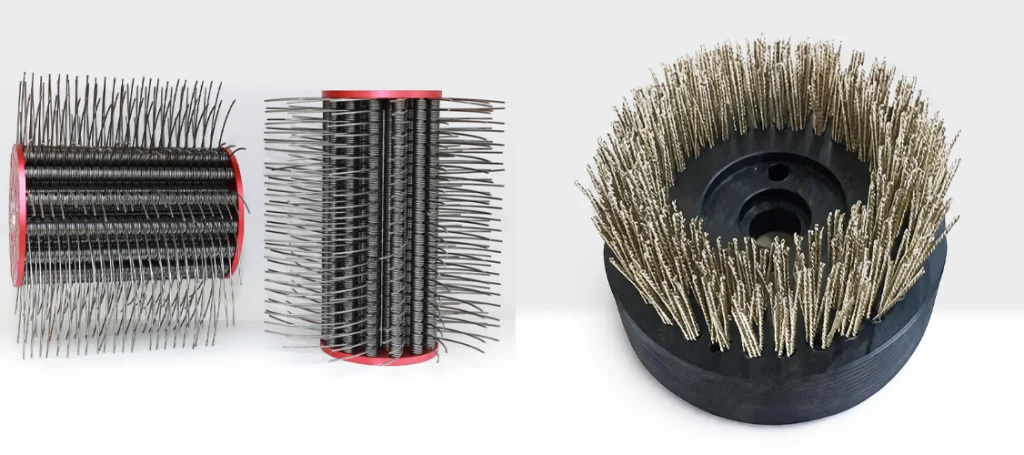
The illustration shows wire-roller and cup-brush tool examples. It is not a drawing of the installed machine or proof that these tools are included, compatible or able to clean every internal contour. Match brush material and geometry to the alloy, machine and contamination-control requirement before use.
Information Needed for the Cleaning Task
| Information | Purpose |
|---|---|
| Material grade and cutting method | Identifies the oxide condition and compatible brush tooling. |
| Part thickness and dimensions | Checks transport support and working access. |
| Holes, slots and internal contours | Identifies edges that may be difficult to reach. |
| Burrs or heavy slag | Determines whether primary removal is needed first. |
| Required surface cleanliness | Defines visual or process-specific acceptance criteria. |
| Next operation | Aligns preparation with coating, welding or bonding requirements. |
Approve the Surface-Preparation Sequence
- Mark the exact face, cut edges and internal features that require cleaning. Photograph representative incoming scale or oxide.
- Remove strongly attached slag and significant burrs through the appropriate primary stages before evaluating the final cleaning result.
- Agree acceptable remaining contamination and permitted stock removal for the next operation; visual face appearance alone may not define that requirement.
- Inspect the actual specified areas after the trial, including any sidewalls or holes proposed for treatment. Record limitations rather than extrapolating from one accessible feature.
Machine Scope and Downstream Preparation
Confirm the selected working width, thickness range, holding method, brush arrangement and extraction for the part family. These machine-selection values are not fixed on this page. Outer edges, small holes, narrow slots and recessed contours require their own access and cleanliness checks; one accessible feature does not establish coverage of the whole part.
Mechanical oxide removal alone does not guarantee coating adhesion, corrosion resistance, weld quality or bonding performance. The required cleaning, pretreatment and downstream inspection remain part of the complete preparation route.
Use slag removal for heavy deposits, deburring for protruding metal, and edge rounding for the specified contour profile. For a visible face texture, review surface finishing.